

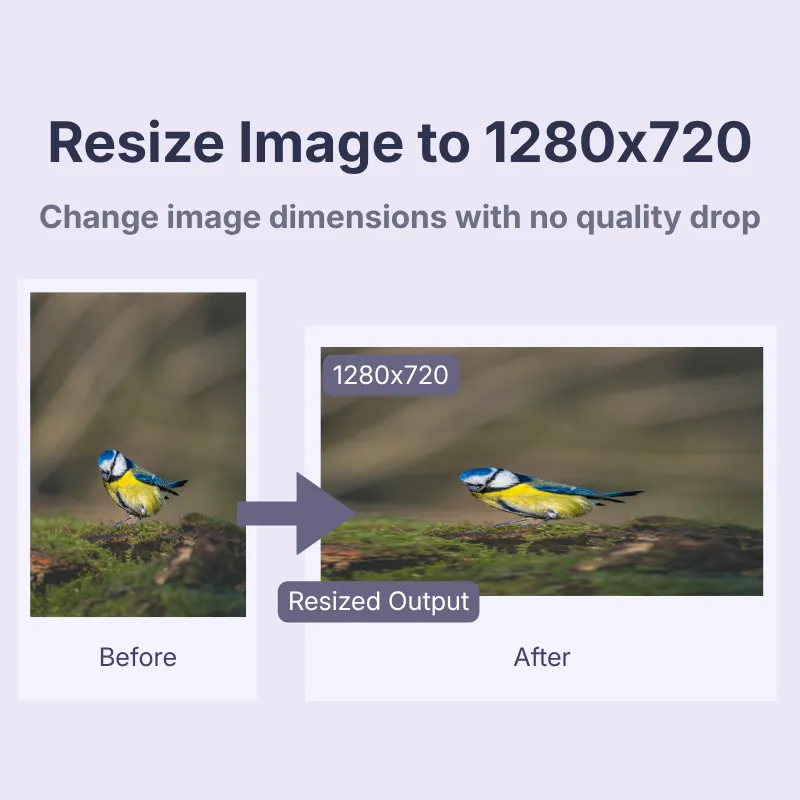
Create images with an exact 1280 × 720 pixel (720p HD) resolution without manually calculating image dimensions. This 16:9 widescreen size is ideal for presentations, YouTube thumbnails, video previews, website banners, digital displays, wallpapers, and multimedia projects. Simply upload your image and generate an accurately sized HD image in seconds.
Since 1280 × 720 uses a 16:9 aspect ratio, the tool provides several resize options to suit different images. Enable Lock Aspect Ratio to maintain the original proportions automatically, or choose Stretch, Crop, Fit, or Fixed depending on how you want the final image to appear. This helps produce widescreen images without unnecessary distortion.
Prepare your image without switching between multiple editing tools. Rotate images 90 degrees to the right or left, flip horizontally or vertically, crop unwanted areas, zoom into important subjects, or change the image shape before exporting. These built-in editing options help you create a polished final image with minimal effort.
Adjust image quality and DPI based on how your resized image will be used. Lower settings help create lightweight images for websites and online sharing, while higher DPI values improve print clarity. If your project requires different sizing units, you can easily switch between pixels, inches, centimeters, and millimeters.
Upload images directly from your device, Google Drive, or Dropbox, or simply drag and drop files into the tool. Once resizing is complete, download your image in JPG, JPEG, PNG, WEBP, or GIF, making it compatible with websites, presentations, videos, documents, and digital publishing.
Resize images directly in your browser without installing software or creating an account. The tool works on Windows, Mac, Android, iPhone, tablets, and Chromebooks, allowing you to resize images securely from virtually any device with an internet connection.
Other useful information
Explore our visual guides and infographics
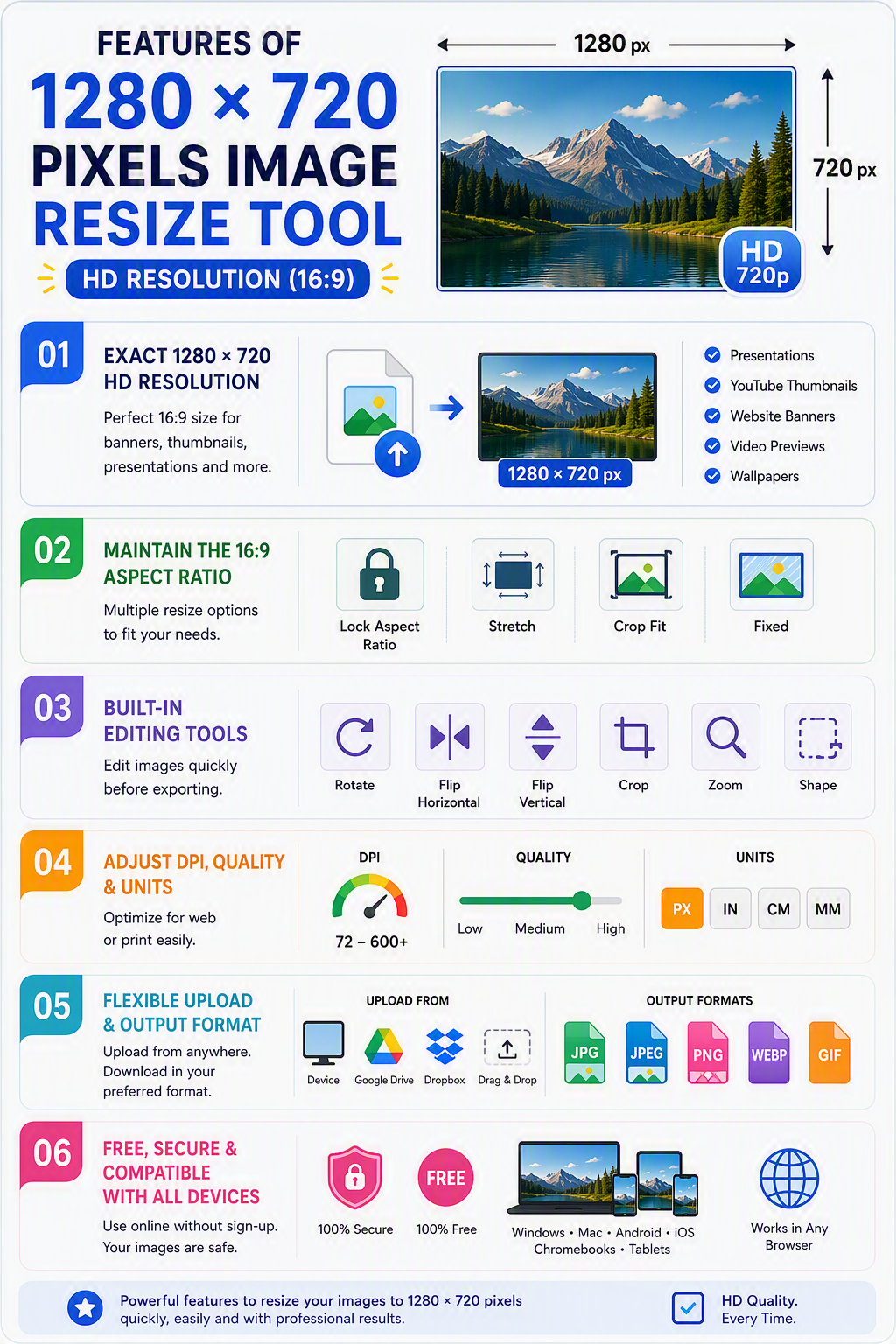
The infographic highlights useful resizing controls for creating images at 1280 × 720 pixels, with options for dimensions, proportions, and output settings.
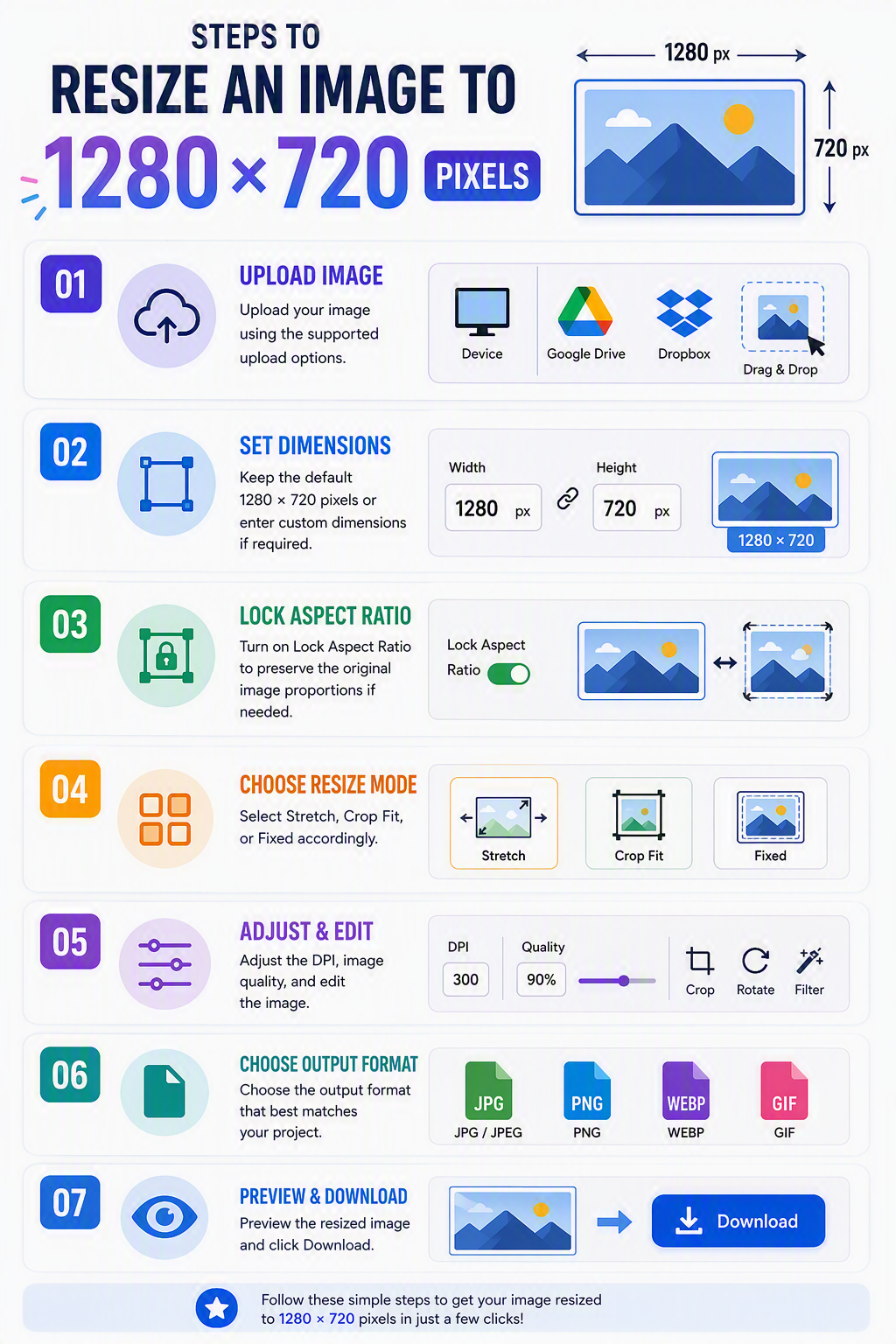
The infographic explains the process of setting an image to 1280 × 720 pixels, from uploading the file to downloading the resized result.
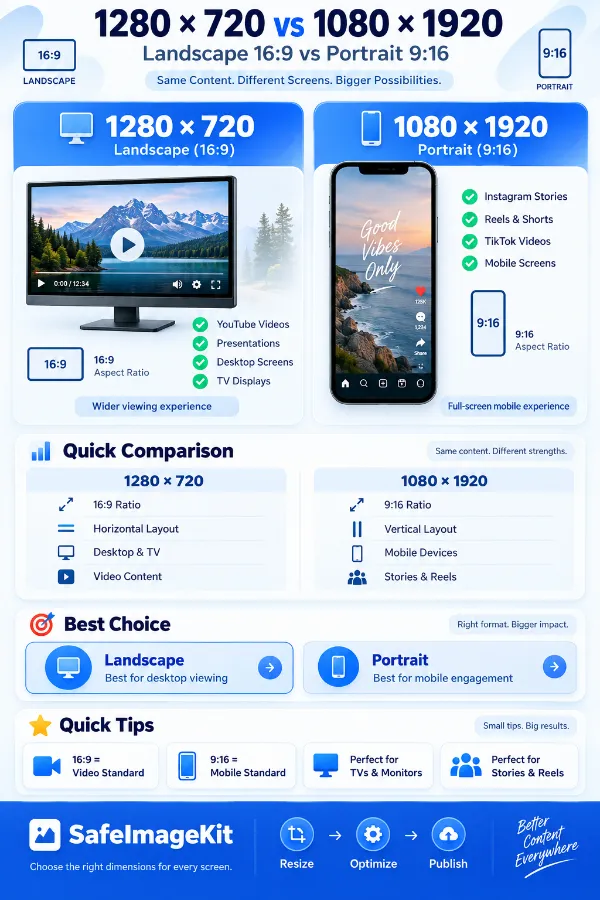
The infographic compares the shape and common uses of 1280 × 720 and 1080 × 1920 pixel images.
Frequently Asked Questions
A 1280 × 720 pixel image is an HD (720p) resolution with a 16:9 widescreen aspect ratio. It is widely used for YouTube thumbnails, presentations, wallpapers, video previews, website banners, and other digital content.
Upload your image, keep the default 1280 × 720 pixel size or enter custom dimensions, choose the resize mode, and adjust the DPI and image quality if required, then download the resized image. You can also rotate, crop, flip, zoom, or enable lock aspect ratio before saving.
A 1280 × 720 pixel image uses a 16:9 aspect ratio, one of the most common widescreen formats used for HD videos, streaming platforms, presentations, and digital displays.
Lock Aspect Ratio automatically keeps your image's original proportions while resizing. This helps prevent stretching and ensures the image maintains its natural appearance.
Choose Stretch for exact dimensions, Crop Fit to preserve the aspect ratio while filling the frame, or Fixed to keep the entire image visible with optional background padding.
Yes. Reducing an image to 1280 × 720 pixels generally preserves image quality. Enlarging very small images may reduce sharpness, so using a high-resolution source image is recommended.
Yes. File size depends on the new dimensions, selected image quality, DPI, and output format.
Yes. Portrait, landscape, and square images can all be resized. Depending on the resize mode, the image may be cropped, stretched, or fitted with background padding.
It is commonly used for HD videos, YouTube thumbnails, presentation slides, website headers, digital advertisements, wallpapers, educational content, online courses, and widescreen graphics.
Yes. You can resize images with different aspect ratios to 1280 × 720 pixels using Stretch, Crop Fit, or Fixed mode. Crop Fit fills the entire widescreen frame while preserving proportions, Fixed keeps the whole image visible with optional padding, and Stretch resizes the image to the exact dimensions.
If the original image has a different aspect ratio than 16:9 and you choose Fixed mode, background padding may be added to keep the entire image visible. If you prefer the image to completely fill the frame, choose Crop Fit instead.
Use JPG for photographs, PNG for graphics and transparency, WEBP for web optimization, and GIF for simple animations.
Yes. At 300 DPI, a 1280 × 720 pixel image prints at approximately 4.27 × 2.4 inches. Larger prints may require a higher-resolution source image.
Yes. You can resize images online for free without creating an account or installing software. Images are processed securely throughout the resizing process.
If you're specifically preparing YouTube thumbnails, use our YouTube Thumbnail Resizer to create images that match YouTube's recommended dimensions and aspect ratio.
If your image needs a solid or custom background after resizing, use our Background Editor to create a cleaner appearance before downloading.
Yes. You can also use our presentation image resizer to prepare images for presentation slides and widescreen display formats.
If you're working with multiple HD images, use our Bulk Image Resizer to resize several files together instead of processing them individually.
Yes. The 1280 × 720 resolution works well for hero banners, landing pages, promotional graphics, display advertisements, and marketing campaigns that use a widescreen 16:9 layout. Always check the platform's recommended image dimensions before uploading.
Yes. The widescreen 16:9 format is commonly used for presentation slides, webinars, online meetings, training materials, and educational content because it fits most modern displays.
Yes. Screenshots can be resized to 1280 × 720 pixels for presentations, tutorials, documentation, websites, or sharing online. The resize mode helps determine whether the image is cropped or fitted.
Image clarity depends mainly on the quality of the original image. Reducing the size usually preserves sharpness, while enlarging a very small image may introduce softness or pixelation.
Yes. You can resize photographs, illustrations, or artwork into 1280 × 720 pixels for HD wallpapers on compatible laptops, tablets, monitors, and other digital displays.
Yes. Transparent PNG images can be resized to 1280 × 720 pixels while preserving transparency, making them suitable for logos, overlays, website graphics, and presentations.
Yes. The original image is not modified. The tool creates a resized copy, allowing you to download the new version while keeping the original file intact.
Yes. A 1280 × 720 pixel image is suitable for presentation slides, educational videos, tutorials, online courses, and instructional content that uses the standard 16:9 widescreen format. It helps create visuals that display clearly on most HD screens.
Yes. Since 1280 × 720 pixels uses the standard HD 16:9 aspect ratio, it is suitable for televisions, projectors, conference rooms, classroom displays, kiosks, and other widescreen digital displays that support 720p resolution.
Yes. Many newsletters, promotional emails, and marketing campaigns use widescreen banner images. Resizing your image to 1280 × 720 pixels can help create clean, consistent visuals, although you should always confirm the recommended dimensions of your email platform.
Over 500k Users Rely on Our Image Editing Tools Monthly
Join a growing community of creators who trust safeimagekit.com for versatile image editing and processing solutions.